Bag History And Evolution: From Artifacts to Accessories
The invention of the bag dates back to prehistoric times, and its origins can be traced through archaeological evidence. While it is challenging to determine the specific individual or culture responsible for its creation, bags have played a vital role in human civilization for thousands of years.
This article explores the history of bags, from their ancient forms to the modern fashion accessories we know today. We will delve into the various types of bags used by different civilizations, examine their designs and materials, and discuss the development of handbags as fashionable accessories. Additionally, we will explore the evolution of handbags throughout the 18th and 19th centuries, highlighting notable historical records of bags and their uses.
We will explore how bags became the fashion accessories that they are today throughout each decade of the 20th century and discuss the 21st century handbag trends that continue to influence their evolution. Finally, we’ll discuss how designer handbags have become prominent in the fashion industry, with luxury brands creating iconic pieces that symbolize status and style.
Who invented the bag?
The invention of the bag predates recorded history, making it challenging to determine a specific individual or culture responsible for its creation. However, archaeological evidence suggests that bags have been an essential part of civilization for millennia, evolving over time to meet the needs of different societies.
When were bags invented?
The remains of a leather purse, which dates back more than 5000 years, were discovered during the excavation of the Tyrolean Iceman known as Otzi who lived between 3350 and 3105 BC. However, due to the brittle nature of early bag materials, it is impossible to pinpoint the precise year when bags were invented.
Another archaelogical discovery near Leipzip uncovered more than a hundred dog teeth arranged close together in a grave dated to between 2,500 and 2,200 B.C, which were likely used as decorations for the outer flap of a bag. (National Geographic, June 27, 2012)
There is therefore evidence to suggest that bags, in some form or another, have been used by humans for several thousand years. Various ancient civilizations, including the Egyptians, Greeks, Romans, and early Mesopotamian cultures, are thought to have used bags for different purposes, such as carrying personal belongings, agricultural produce, and trade goods.
The materials used in ancient handbags were often perishable, which makes it challenging to find well-preserved examples today. Therefore, much of our understanding of ancient handbags comes from artistic representations and limited archaeological finds.
What did ancient bags look like?

Ancient bags varied in design and materials depending on the civilization and time period. While the exact appearance of ancient handbags is not always well documented, depictions in artwork and archaeological findings provide some insight into their characteristics.
Historical artworks and artifacts that depict bags being carried by individuals in different scenarios include works such as an Assyrian relief carving from Nimrud, 883–859 B.C., housed in the Metropolitan Museum of Art (Ancient Origins, January 25, 2017) and an elaborately decorated leather bag sketch by Leonardo da Vinci around 1497. (Artuk.org, November 20, 2020)
However, there is no conclusive evidence to suggest what exactly these bags were used for or if they were thought of as fashion accessories or luxury items in the same way we think of handbags today. Without an accurate historical insight into what these early bags were used for, pinpointing the very first handbag in history is not possible.
What did medieval bags look like?

During the fifteenth century, there was a shift from pouches closed with drawstrings and hanging from the belt to purses with metal clasps and loops on the rear, according to the Metropolitan Museum of Art. These clasps allowed the purse to be directly attached to the belt, providing greater security for money or other valuables when the owner walked in crowded city streets.
Other examples of medieval bags include a collection of different styles and designs at The Museum of Sens in France, which showcases bags that were made of silk and adorned with intricate embroidery. One small 13th-century bag depicts a fish motif, embroidered with split stitch and highlighted with gold thread.
Another bag from the same period features precise geometric patterns stitched in long-armed cross stitch and cross stitch. A larger bag from the 12th century displays images of a knight and an eagle with a rabbit or hare. It is embroidered using vibrant silk threads in split stitch.
Additionally, a 14th-century bag, considered a lover’s token, depicts scenes of women under a tree and a man and woman embracing, with a woodpecker included as a detail. These bags give us a glimpse into the craftsmanship and symbolism of medieval times.
What were old bags called?
Some examples of old bag types and their associated names include a pouch, a reticule, a saddlebag, a knapsack, a haversack, a chatelaine, a carpetbag, and a gladstone bag. In the context of historical bags, different types of bags had specific names depending on their design, purpose, and cultural origins.
These are just a few examples of old bag names, and there are many more variations and styles throughout the evolution of the bag, each with its own specific name or descriptor. The names of old bags and more modern bag styles often reflected their purpose, construction, or cultural context, like the term “handbag”, which was first used in the early 1900s to refer to men’s hand luggage.
What is the difference between a bag and a handbag?
The main difference lies in size, style, and intended use. Handbags are a type of bag that are designed to be fashionable and carried by hand, while the term “bag” encompasses a wider range of containers used for carrying or storing items. However, the terms “bag” and “handbag” are often used interchangeably.
A bag is a general term that refers to any container with an opening used for carrying or storing items. It is a broad category that encompasses a variety of styles, sizes, and purposes. Bags can be made of different materials, such as leather, fabric, plastic, or even natural fibers. They can have handles, straps, or other means of carrying.
On the other hand, a handbag specifically refers to a type of bag that is designed to be carried by hand or hung from the arm or shoulder. Handbags are typically designed and manufactured to a higher quality than ordinary bags and are more stylish in nature; they are often considered fashion accessories. They are used by men and women to carry personal belongings such as wallets, keys, laptops, and other essentials.
While all handbags are bags, not all bags are handbags. Handbags are a specific subset of bags that are typically smaller, more fashionable, and intended to be carried by hand or on the arm. Other types of bags, such as backpacks, tote bags, duffel bags, and messenger bags, serve different functions and may have distinct designs and carrying methods.
Who invented the handbag?
H.J. Cave of London produced the first modern set of handbags in 1841 following a request by an entrepreneur named Samuel Parkinson to produce a set of traveling cases for his wife that were larger and more suitable for accompanying him on his travels. During this period, women were used to carrying smaller, more delicate-style bags that were not that practical or durable.
It’s important to note that while H.J. Cave is credited with producing the first handbags for women, historical evidence suggests that bags were worn for many years prior by men and women for different reasons and in different ways. There is therefore no conclusive evidence to identify who made the first handbag in history.
What was the first handbag in history?
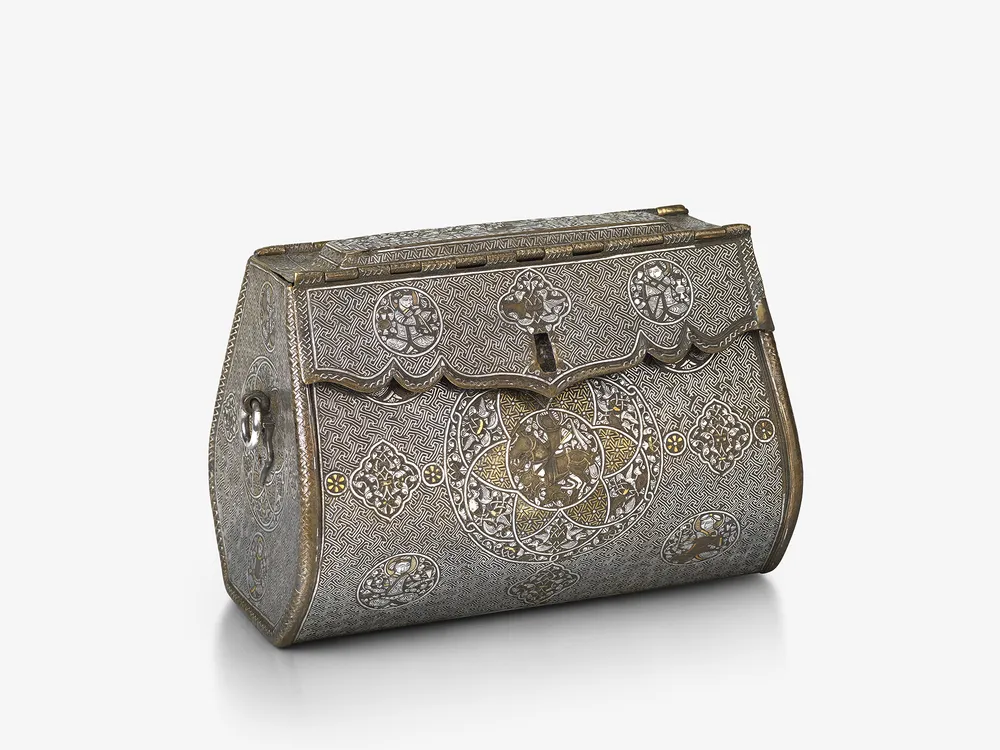
The oldest bag thought to have been used as a woman’s handbag is a 700-Year-Old elaborate purse made in Mosul, Iraq, around 1,300 A.D. While handbags are thought to have been used for years before this, the bag has been identified as one of the earliest surviving examples of a woman’s purse. (Smithsonian Magazine, February 24, 2014)
The bag is made of brass inlaid with gold and silver and is still in remarkable condition considering its age. Given its intricate design, the bag was most likely crafted for a very important individual, yet it is still not known what they would have carried inside it. Nonetheless, it offers a very rare and unique insight into what we think of today as a handbag may have looked many years ago.
Other historical artworks and artifacts that depict bags being carried by individuals in different scenarios include works such as an Assyrian relief carving from Nimrud, 883–859 B.C., housed in the Metropolitan Museum of Art (Ancient Origins, January 25, 2017) and an elaborately decorated leather bag sketch by Leonardo da Vinci around 1497. (Artuk.org, November 20, 2020)
However, there is no conclusive evidence to suggest what exactly these bags were used for or if they were thought of as fashion accessories or luxury items in the same way we think of handbags today. Without an accurate historical insight into what these early bags were used for, pinpointing the very first handbag in history is not possible.
When did bags become fashionable?
The concept of a handbag as a fashionable women’s accessory originated in the late 18th century and continued to develop in the 19th and 20th centuries. The evolution of the handbag was heavily influenced by social and cultural changes, making it challenging to determine exactly when it was first used as a fashion piece.
As Ida Thomshinsky details in her publication, Bags and Purses: The Story of Chic and Practicality “By the latter half of the 1800s, handbags had finally come into vogue. At first, the term “handbag” referred specifically to a small piece of luggage that was hand-carried by a man while travelling, but the term was soon understood to describe the larger cousin to a woman’s purse. Thanks to their roots as luggage bags, the earliest handbags designed for women featured compartments inside the bags, sturdy handles, and metal frames and fastenings.”
What were 18th-century handbags like?
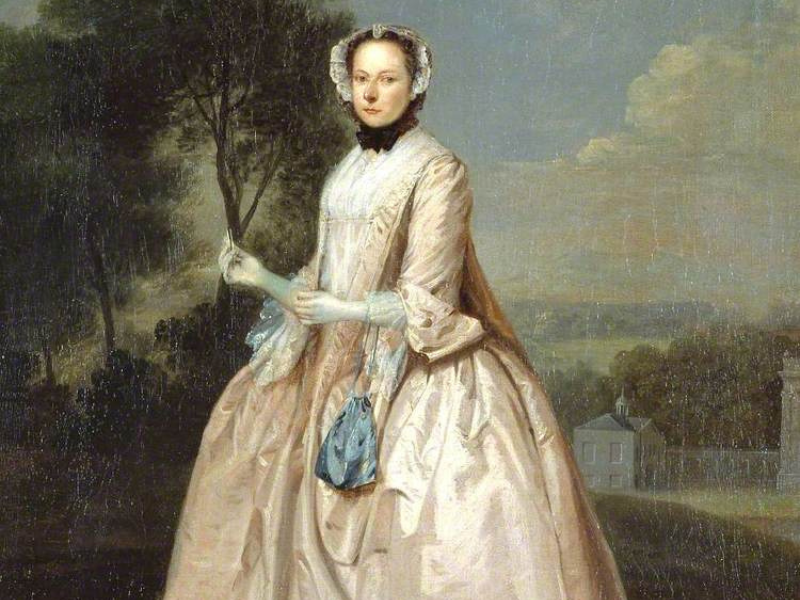
In the early 18th century, handbags, also known as reticules or ridicule bags, were carried by women in their hands or draped over their wrists. They were seen as decorative pieces and were often made by hand and embellished with beaded details, embroidery, and needlework as an indicator of the family’s wealth.
Unlike modern handbags with sturdy handles, 18th-century reticules typically had delicate handles or cords attached to the sides. These handles were made of silk, ribbon, or braided cord. Some reticules had metal rings or loops to which the handles were attached or a simple drawstring closure that could be left loose to create a gathered effect or tied into a bow for added decoration.
What did 19th-century handbags look like?

Handbags in the 19th century underwent significant changes in design and style compared to earlier periods. The Industrial Revolution meant that women became more mobile and would be away from home for longer periods of the day. As a result, leather artisans began to create hand-held bags that were easier to carry.
Paper maché and leather handbags became increasingly popular, and they were often adorned with decorative elements such as embossing or tooling. Handbags began to incorporate more functional handles and straps. Chain straps, often made of metal, were introduced and allowed the bags to be carried over the shoulder or across the body. Leather handles or fabric straps were also used for handheld carrying.
What did purses look like in the 20th century?
Handbags in the 20th century underwent significant transformations in design and saw a wide variety of handbag styles, thanks to the evolving fashion trends, societal changes, and technological advancements of the time. Some of these styles included beaded bags, vanity cases, clutch bags, envelope bags, and box bags. Here’s an overview of how purses progressed during different decades of the 20th century.
What did handbags look like in 1900-1919?
In the early 20th century, handbags were generally small and structured. They often had a boxy or rectangular shape and were made of leather, fabric, or metal mesh. These purses were typically carried by hand or held by small handles. Handbags started being used as accessories, initially by men and later by women.
Beaded bags began to see a resurgence in popularity after their decline in the latter half of the 1800s, with some historical records showing there was difficulty sourcing enough beads or beads of certain colors to meet the demand during World War I.
What did handbags look like inthe 1920s?
In the 1920s, handbags became more than just functional items and started incorporating fashion elements. During this decade, the rise of the Art Deco and Flapper movements greatly influenced handbag design and aesthetic. Beaded pouch purses with a single chain strap, mesh purses with metallic tones, embroidered tapestry-like bags, and metal frame kiss-lock bags were mainly in style. The 1920s are also notable for the rise of the vanity case and the first ever handbag with a zipper closure, created by the French luxury fashion house Hermès.
What did handbags look like in the 1930s?
The prevailing handbag trend of the 1930s called for smaller and more simple silhouettes due to the economic effects of the Great Depression. Clutch purses gained popularity, featuring a compact size that could be held in the hand with metal frames, and snap closures. Elegant evening bags emerged as a result of old Hollywood glamour, the most notable being the Minaudière, invented by Charles Arpels.
What did handbags look like in the 1940s?
Practicality and functionality became essential parts of handbag design in the 1940s due to World War II. Clothing scraps, straw, raffia, yarn, crochet, and other inexpensive materials that were easier to source were used to make military-inspired designs. Deep purses with long handles, envelope bags, and scallop bags also became popular to accommodate women’s need to carry more things during wartime as they started to move into the workplace.
What did handbags look like in the 1950s?
Unusual bag shapes gained popularity during the 1950s, the most notable of which was the box bag. They were structured and often rectangular or square in shape, resembling a small box with a top handle and a clasp closure. The 1950s also saw the rise of designer bags, with logos starting to appear to denote luxury brands. The decade was marked by two bags that are still highly coveted today in the fashion world: The Chanel 2.55 and the Hermès Kelly.
What did handbags look like in the 1960s?
In the 1960s, experimental, accessible, and statement-making handbags complemented the transformation of the fashion landscape. As women embraced increasing freedom in their style choices, the traditional handbag became less of a necessity. Instead, practical pockets on dresses gained popularity.
However, handbags remained alluring as statement pieces. Paco Rabanne’s chainmail purses became iconic accessories, while brands like Biba and Mary Quant catered to the rise of high-street and mod fashion. Bottega Veneta introduced the transformative intrecciato weave, and Louis Vuitton created a practical version of the Speedy at the request of Audrey Hepburn.
What did handbags look like in the 1970s?
During the 1970s, handbags embraced a bohemian aesthetic that aligned with the hippie-influenced fashion of the era. They were often made of soft leather or suede and featured long, slender straps for cross-body wear. Mulberry emerged in 1971, offering embroidered and fringed suede bags from its Somerset workshop. Karl Lagerfeld at Chloé incorporated exotic trims and crafty details into supple leather bags, defining the brand’s bohemian style. Loewe captured the free-spirited essence of the time with the practical, unlined Amazona bag in their iconic yellow leather.
What did handbags look like in the 1980s?
The handbags of the 1980s embraced the era’s excess and consumerism with maximalist designs. They were adorned with eye-catching monograms, glitzy hardware, and prominent branding. Karl Lagerfeld revived Chanel’s Classic Flap handbag, featuring the iconic interlocking CC logo, while Dior’s quilted top-handle tote gained popularity and was later renamed the Lady Dior in honor of Princess Diana. Fendi’s FF logo saw a resurgence, and Hermés introduced the iconic Birkin bag.
Miuccia Prada’s nylon bag challenged traditional notions of luxury and emphasized practicality. Bright colors, metallic finishes, and heavy hardware were prominent features. Chain-handle purses and clutches were popular choices, and backpacks became a stylish alternative, particularly Prada’s Vela nylon backpack. The Bermuda bag, with its reversible body, and Vera Bradley’s soft, quilted fabric bags also gained attention. Fashionable gym bags, typically large and displaying brand names prominently, complemented the aerobics trend of the decade.
What did handbags look like in the 1990s?
The 1990s witnessed the rise of the “It bag” phenomenon, and handbags that were associated with celebrities played a significant role in shaping handbag trends. The Fendi Baguette, launched in 1997, became a sensation with its unique silhouette and oversized FF clasp.
Other notable handbag styles from the 1990s include the Celine Macadam’s Blazon Chain, known for its trapeze shape and distinctive C-chain handle, and the timeless elegance of the Hermes Kelly, originally popularized in the 1950s by Grace Kelly. The saddle bag, Louis Vuitton’s monogram bags, Gucci’s bamboo-handled designs, stylish canvas bags with shoulder straps, and the bowling bag marked the evolution of handbag trends towards the end of the 20th century.
What bags were popular in the 2000s?
With the turn of the century, designer “it bags” and celebrity-approved bags became even more prominent, with highly anticipated launches commanding long waitlists. Practicality took a backseat as fashionistas coveted bags like Chloé’s Paddington, weighing over 1kg with a decorative padlock, and Alexander Wang’s heavy-studded Rocco.
The Dior Saddle bag emerged as an iconic silhouette; Louis Vuitton’s collaborations with Takashi Murakami, featuring rainbow-hued monograms; and Balenciaga’s Motorcycle bag, initially dismissed but propelled to covetable status by Kate Moss, made their mark. The Prada Nylon bag, initially frowned upon, gained popularity for its timeless design and functional material. Denim bags, exemplified by Louis Vuitton’s Denim Baggy, captured the spirit of the decade.
What handbags were popular in the 2010s?
In the 2000s, handbags went through various trends and styles. It-bags, such as Céline’s Luggage Tote and Mulberry’s Alexa, gained immense popularity and continued to be sought-after. Other notable handbags from this era included Givenchy’s Antigona, Chanel’s Boy bag, Chloé’s Faye bag, and Gucci’s Dionysus. Balenciaga’s studded Motorcycle bag also made a significant impact. These handbags were often inspired by fashion icons and had distinctive features like tassels, studs, and unique shapes.
Céline’s Trio bag became a classic due to its size and affordability. Saint Laurent’s Sac de Jour signaled a more mature shift in handbag tastes. Louis Vuitton’s Twist bag, Gucci’s Marmont, Loewe’s Puzzle bag, Dior’s revitalized Saddle bag, and Bottega Veneta’s Pouch bag also gained popularity during this decade.
What handbags are popular in the 2020s?
In the 2020s to date, handbag trends have continued to evolve, showcasing a mix of classic styles and innovative designs. Oversized totes, structured top-handle bags, mini bags, and belt bags have endured more than a brief fluctuation in popularity. Sustainability and ethical practices have gained prominence, leading to the rise of vegan leather bags and purses made with recycled materials. Understated luxury bags have risen in prominence, surpassing the popularity of recognizable monogrammed and heavily branded purses.
While traditional luxury brands like Chanel, Hermès, and Celine continue to reign supreme, there has also been a surge in the popularity of affordable luxury and emerging designer brands. These brands have brought fresh perspectives and unique aesthetics to the market, seamlessly blending quality craftsmanship with more accessible price points. By offering a compelling combination of style, affordability, and quality, emerging designer and contemporary luxury brands continue to capture the attention of the fashion world.
When were designer handbags invented?
Designer handbags, as we understand them today, emerged in the 20th century with the rise of fashion houses and luxury brands. While bags with recognizable brand names existed prior to this period, the concept of designer handbags as highly sought-after fashion accessories became more prevalent in the mid-20th century.
Designer handbag brands have become status symbols and highly desired fashion accessories, known for their craftsmanship, quality materials, and association with luxury and prestige. The exact timeline and contributions of individual designers and brands to the world’s best-made handbags can vary, but the 20th century is generally regarded as the period when designer handbags emerged as a distinct category in the fashion industry.
What do handbags symbolize?
Handbags symbolize various things, including fashion, functionality, independence, status, wealth, heritage, and pop culture trends. They can reflect an individual’s personal style by aligning with fashion trends and symbolizing participation in pop culture, or be indicative of a more traditional and classic taste.
What are the most iconic bags in history?
There have been numerous iconic bags throughout history that have left a lasting impact on the fashion world. These bags have achieved legendary status, becoming timeless symbols of style and luxury.
While it’s difficult to encompass all of them, some of the most iconic bags in history include the Hermès Birkin Bag, the Chanel 2.55 Flap Bag, the Louis Vuitton Speedy Bag, the Gucci GG Marmont Bag, the Fendi Baguette, the Lady Dior bag, the Balenciaga Motorcycle bag, and the Prada Nylon backpack.
These bags have left an indelible mark on fashion history and continue to inspire designers and fashion enthusiasts alike. They embody the perfect fusion of design, craftsmanship, and cultural significance, making them iconic symbols of style and luxury.
What is the difference between a purse and a handbag?
The main difference between a purse and a handbag is that a purse is typically perceived to have a smaller hand-held design that’s made to fit a few items, while a handbag is larger in size, more functional in its design, and is usually carried on the shoulder. Both terms are often used interchangeably and synonymously with one another.
The parts of a handbag or purse are relatively similar, with subtle differences. Generally speaking, purses have shorter, detachable straps, while handbags feature longer, adjustable straps or handles that can be worn or carried in various ways. Purses typically have limited compartments, while handbags offer multiple compartments and organizers for better organization. Closure mechanisms on purses are usually simpler, while handbags may have additional options for security.